End-of-2007 State of the Union
2007. What a year. Ubuntu cranked out two more solid releases, sub-$500 laptops flooded the market and undermined Microsoft's influence, and 3D desktop effects continued to improve. The DistroWatch charts were invaded by Texans, and several new distros appeared on the scene, while existing ones (Mint, Sabayon) joined the ranks of the Top 10. And what a Top 10 it is... Gentoo: What a nasty year for Gentoo! First, Daniel Robbins comes back to join the amd64 development squad, only to leave in disgust a week later. The development process over there is devolving into anarchy, and it's not helping their release schedule: The first release arrived three months late, and the second (and last for the year) is already even later. Expect Gentoo users to flock to Paldo and Sabayon- which will help Paldo make it into the Top 10. Mandriva: Another year, another two solid releases, and another Corporate Desktop. Mandriva continues to tweak their software selection, improve 3D effects, and make their distribution even faster. But it's showing signs of age- both releases were two weeks late, and little else changed except artwork, eye-candy, and the usual upgrades. Mandriva seems built to last, but it will be overrun if development keeps up at this pace. Slackware: Slackware is still Slackware- sort of. Another release this year, but this time, they actually upgraded some key packages. Linux is at 2.6.21.5 (a step up from 2.4.33.3), X made it to version 7, and Apache is from the 2.2 series. Slackware, like Debian, is used as a base for countless other distros ( Zenwalk, Vector, Wolvix, etc), which means they'll all finally include some decent software. Debian: They actually had a release this year! :-) Etch turned out to be a solid, fast, customizable release, and a solid base for distros like Pendrive Linux and Dreamlinux. Ubuntu is still clobbering them, but they still have a huge following, and rightfully so. Sid remains the most up-to-date Linux distribution. Sabayon: Now that they have Daniel Robbins on their side, they might start replacing Gentoo... Oh, wait, they did that already. Never mind. Sabayon is still a distribution of its own, with its own (overstuffed) software selection and exceptional hardware support... Or, at least, it was until they introduced the "Core Install" in version 3.4, which installs a minimal base that can be built upon, Arch-style, using Portage or Equo, Sabayon's new binary package manager which one-ups Gentoo in yet another way. Ouch. Fedora: Version 7 was a letdown. Version 8 was outstanding. Version 9 is going to be awesome, now that they're back on track with a stable system (even with all the bleeding-edge software) and have an extensive feature list planned for it (including KDE 4). Bring on RHEL 6! Mint: Touted on Digg as "the new Ubuntu", this Ubuntu fork is faster, more complete out of the box, and (arguable) has better artwork. All this in addition to the mintTools including file sharing (mintUpload), a customizable control center (mintConfig), an update manager (mintUpdate), and more, all open-source. It's still a toss-up as to which distro has cuter code names, though. openSUSE: 10.3 turns out to be the simple, straightforward release the last few versions were supposed to be, albeit 10 months after 10.2. It also turns out not to be for hobbyists (go with Fedora in that case). They're still adding features, though, and the brand-new one-CD live/install hybrid option is worth all the effort they put into it. Ubuntu: Ubuntu continues to be Ubuntu- minus the number-one spot on DistroWatch, and plus three new derivatives ( Ubuntu Studio, Gobuntu, and Fluxbuntu). Also added are revolutionary new X-fixing tools (graphical, no less), a codec wizard that blows Fedora's new Codeina out of the water, hardware driver management, and- finally- Compiz Fusion effects. W00t! PCLinuxOS: Somehow, they manage to steal the number-one spot on DistroWatch's charts with only one release throughout the entire year (and the next one'll have to wait until long after KDE 4 is out later this month). According to DW's Ladislav, the results are not rigged, and so one has to wonder where all those hits are coming from... Anyways, PCLinuxOS 2007 brings a face-lift, huge speed improvements (it's now one of the fastest distros that's not source-based or based on Slackware), Beryl (which is out of date), and enough codecs and programs ( Frostwire, anyone?) to keep you off Apt for weeks. From Ubuntu 7.10, The Distrogue. Labels: debian, fedora, Linux, mandriva, mepis, mint, opensuse, pclinuxos, sabayon, state of the union, Ubuntu
Paldo GNU/Linux 1.2: Yet Another Generic Distro
If you've never heard of Paldo, you need to check DistroWatch more. This completely new hybrid distribution (source *and* binary backage management) has started to get some major attention, and one site even went so far as to call it "this year's Sabayon". Paldo is a completely independent distribution, compiled using Linux From Scratch and with its own package management system, upkg, to manage programs. It works similarly to Gentoo's Portage, with one exception- it can also install binary packages. This makes installation much faster, but if you're after customizability (like Gentoo), then you might want to try compiling. Note that if you try to compile everything from source, you might want to have another working system, along with a few DVDs to watch while you wait. Paldo's CD image weighs in at 650MB for x86 and 674MB for x86_64, surprisingly tiny. It has boot-time language selection and boots into a fully-functional live CD. I didn't try using it with Syslinux on my USB key.
Installation
Paldo's installer is completely new in version 1.12. Before that, it didn't even have an installer. But now, it does, and it works very well. The wizard looks similar to Ubuntu's Ubiquity installer, only going through a few steps before doing the install (language/time zone, partitioning, system setup, user setup, etc). After those screens, the install finished in a scant 10 minutes, complete with a cute progress bar. An important caveat, though: The bootloader setup does NOT detect other OSes!   Artwork ArtworkPaldo doesn't ship with any custom artwork, opting for the default GNOME artwork. Not that this is a bad thing; it gives off an air of purity, as it should- Paldo is a completely independent distribution, and the packages haven't been modified at all. The default icon theme, though, is a tad ugly, and doesn't have any bragging rights over more polished icon sets (especially Ubuntu's "Human" theme). 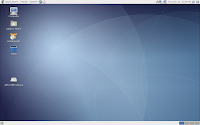 Installed Software Installed SoftwarePaldo's default package selection looks meticulously selected. It has GNOME as the default desktop, along with all the goodies ( GIMP, OpenOffice, etc), but with some extra non-free plugins. My screen resolution and wireless card were detected immediately, and MP3 playback worked flawlessly. My main problem was that the developers opted for Epiphany over the far-superior Firefox as a Web browser. On the plus, Epiphany's homepage is set to Google, a smart move. Upkg does not have a GUI front-end. You'll need to find the package names online via the repository search and install them over the command line. I hope there will be something like Synaptic in the near future, it shouldn't be too hard to write. Paldo includes a bizarre number of development tools. I know it's supposed to be source-based, but Gentoo doesn't have most of the tools Paldo does. Among the programs were Anjuta, Glade, MonoDevelop, a hex editor, and a diff viewer. Hmm... With MonoDevelop and Glade, maybe the developers want you to code a front-end for upkg! For media, there's the lightweight Brasero CD burning tool (which absolutely rocks), Totem for movie playback, the ugly, bloated Rhythmbox for music management ( Exaile gets my vote), and Sound Juicer for CD ripping. Putting Exaile in should solve the problems here. I'm starting to see a pattern, though: A lot of these apps are GNOME projects (like Rhythmbox and Epiphany). The Paldo devs need to learn that when it comes to GNOME projects, it would be a wise idea to not blindly stick to them, but to look for replacements that can do the job better. As far as how current it is, there's Linux 2.6.23.1, the stable until the flurry of updates on Friday, and GIMP 2.4.0, along with the latest GNOME at the time of writing. The latest Firefox is available in the repository (although it should have been on the CD), as is Compiz 0.6.2 (latest, again). Hardware SupportLike I said, my native 1280x800 screen resolution was detected flawlessly, as was my wireless card (an ipw3945). However, I had two major issues when I tried playing Tremulous. The biggest one was with my mouse. I use both a touchpad and a wireless, optical 3-button mouse (from Logitech). The touchpad worked flawlessly, but the mouse never left the bottom-right-hand corner of my screen in-game- but worked fine on the desktop. Huh... The second was performance. Tremulous on Paldo plays like Ubuntu, minus swap, and after a week of intense uptime. Nasty. The FPS rates were about 30% lower. GLXGears confirmed this. But this isn't really a hardware issue so much as a software issue- but still, with CFS and heavy optimizaton, where is all this lag coming from? PackagingUpkg is seriously the best package manager I've seen so far. The pre-configuration steps took about 5 seconds, and packages installed quickly from binaries. The source-building process was astoundingly fast. I installed openal and audiofile (a dependency) in order to play OpenArena, and here were the results: time upkg-build openal ... real 0m16.236s user 0m5.779s sys 0m0.987s 16 seconds to build two packages. It makes one wonder- is it really compiling them, or just installing them? According to the appropriate wiki page, the upkg-build command I used does, in fact, compile. Wow. That was just amazing. Pros:
-Upkg shows promise
-Customizable and flexible
-A clean, basic system
Cons:
-Slow and bloated
-No front-end to upkg
-Software selection needs tweakage
Friendliness: 4/5- The lack of a GUI frontend to upkg drags it down a bit. Performance: 2/5- Seriously, it's almost as bad as Fedora. Not what you'd expect from an x86-optimized distro with CFS. Features: 3.5/5- Meh, it's a complete desktop, but not much else. And besides, Firefox? Hello? Packaging: 4/5- Upkg is a great piece of software; it would be even better if someone coded a GUI for it like Portato. Artwork: 1.5/2.5- Kind of ugly... The developers should at least browse www.gnome-look.org for a bit. Hardware detection: 2/2.5- Mouse issues, but otherwise, fine. NOTE: This score was originally for "Community", but since Paldo's new, there isn't one, so N/A.  Overall: 3.4/5 Overall: 3.4/5- Could be a solid distribution with some more programs and a frontend to upkg. My sights are aimed at Fedora 8 and PC-BSD 1.4.1. PC-BSD is what I'm looking forward to the most, having tried it before back at version 1.11 and not really hated it that much. From Paldo 1.12, The DistRogue. Labels: gentoo, Linux, paldo, Reviews, sabayon
Review: SabayonLinux 3.4e
It's been a while, hasn't it? School really has a way of slowing things down. But now I'm back on track. Personal problems aside, it's well-known that Gentoo is one of the hardest distributions to install. So well-known, in fact, that there have been a lot of attempts to cut down on the install time by either automating the process or using binary packages. Sabayon Linux is one of the more important results to come out of efforts like these. Based in Italy, and named after a local dessert, you can tell it's going to be good almost immediately- guess who won the World Cup last year? The basic idea behind Sabayon back when it was still young and was called RR4 (read: late 2005) was to take a Gentoo system, compile it for an i686 architecture, and install it as a series of binaries instead of compiling the whole thing from scratch. But later, Sabayon began taking turns in different directions, eventually moving from XFCE to KDE as the default desktop and even including demo versions of Quake 4 and Cold War, along with other proprietary software that Gentoo would never dream of adding. The system was synced into Gentoo's Unstable repository, and the project took on a bleeding-edge philosophy. By version 3.4e, Sabayon had grown into a monster of engineering, and on the surface, seems like nothing more than a jumble of useless software. But that's not all. Sabayon is an entire distribution, not just a remastering of a parent distro. For once thing, Gentoo is notoriously hard to base a distribution off of, but Fabio Erluciani and company managed to get away with it by using a custom system of catalysts and overlays for Portage. It also has its own artwork, including one of the best color schemes I've seen. It has some "glue" for holding the diverse range of software together, such as a custom autodetection program for NVIDIA and ATI graphics cards to select (closed-source) drivers. Finally, in the works (and available as of version 3.4e) is an alternate package-management system called Entropy, featuring the Equo package manager, which works the way apt-get would, installing packages the way the main system is- using binaries instead of compiling everything. I got a copy of the 4.3-gig x86-32 DVD. It booted into a nice wizard for setting up 3D effects, complete with some music- a nice touch that can be disabled at boot time. After that, it went into a full KDE desktop with shortcuts to an obscene selection of games. Danger from the Deep? Torcs? FlightGear? God only knows how they got in there in the first place, but Nexuiz makes a good substitute to Quake, and Sauerbraten is still a great game. The install, with everything checked except KDE and 2D arcade games (package selection is new in 3.4, and a welcome improvement), took an hour and a half and took up 9GB of space. Wow. And they say Gentoo is slow... On the plus side, the miniEdition, a CD-sized version of Sabayon 3.3, installed in about 20 minutes, owing to its smaller (but still complete) software selection. For people who still like to build their own desktop, try the Core Install option in the install wizard. It installs a minimal text-mode system, from which you can emerge [insert desktop here] just the way you'd want it (except for the artwork- but that's not a bad thing). Performance was disappointing. Sabayon is supposed to be fast, but it took almost 2 minutes to boot on the first try, and only improved to 80 seconds on subsequent boots. Even with the "geeky" minimal Fluxbox environment, I could only get 1100 FPS in GLXGears, and Sauerbraten was nothing special- 20FPS. (Note: The map I use to test FPS is metl4, and I measure FPS by crouching behind the yellow armor with a grenade launcher. It's not great, but it's standardized. If you *really* want to give [insert distro here] a workout, try skycastle. It's an awesome map, but it's insanely laggy.) Tremulous was too laggy to play- but it felt cool to be able to tack "@Sabayon" onto my screenname. :) Entropy is still under construction, making it completely useless at the moment. Binmerge (an older package manager) is still there, but it doesn't work. Equo works perfectly, but so far, nothing can be installed. I had to stick with good ol' Emerge for package management. Sabayon includes a GUI to Portage called Portato, and a KDE version called Kuroo. I tested Portato, and it worked perfectly- just take my advice and don't do a world update until you have a LOT of free time. Update Portage immediately- version 2.1.3.3 has a nasty bug that slows it down. 3D desktop effects are pretty standard by now, but Sabayon, being the bleeding-edge project is, includes Compiz Fusion and Metisse instead of the standard Compiz Vanilla and Beryl. It also comes with the SabayonLinux Acceleration Manager (aka SLAM), an open-source wizard for setting up acceleration through the two desktops. Overall, Sabayon is a good desktop for beginners who want to live on the bleeding edge. It's a great way to ease newbies into Linux and show them what makes a distro work without the multiple-day installs of Gentoo.
Pros:
-Fast-ish installs (sort of)
-Considerably easy to use
-Customizable system via Core Install (for advanced users)
Cons:
-Non-Core-Install systems are slow
Friendliness: 4.5/5- In marked contrast to Gentoo. Performance: between 2.5 and 4.5/5- It really depends on how the system is installed. MiniEdition installs are pretty fast. Features: 5/5- Every conceivable program for Linux is on that DVD. Packaging: 4.5/5- Portage + GUI = l33t. Artwork: 2/2.5- Still needs work, but the general red-on-black color scheme is awesome. Community: 1.5/2.5- The forums are comfortably large, and the Freenode IRC channel is always welcoming. Overall: 4-4.4/5- Keep an eye on it as it matures. From Debian 4.0r1 (wink wink nudge nudge), The DistRogue. Labels: gaming, gentoo, Live, portage, Reviews, sabayon
Five reasons to love Sabayon
You've probably heard the constant hype about Sabayon Linux, maybe that it's a perfect distro, or maybe even rumors that it's going to knock PCLinuxOS and Ubuntu off the top spots on DistroWatch. (Surprise! PCLinuxOS has the #1 spot, after the release of version 2007.) Odds are, though, you don't really know what the fuss is about. Here are the main reasons why people love Sabayon: - Speed. Sabayon is a derivative of Gentoo Linux, which compiles itself from source. This gives it immense speed, and tunes it perfectly to your system. The difference? Gentoo installs itself over a period of days; Sabayon takes a matter of minutes. - Packaging. Gentoo uses the Portage packaging system, which compiles everything from source. While Sabayon uses Portage too, an alternate packager called Entropy is under development that uses compiled binaries to install packages much faster than Portage. - Up-to-date-ness. Another trait of Sabayon is that it tends to be more bleeding-edge than other distros. A lot of the software is straight out of the nightly builds, and not very well-tested. This means, however, that Sabayon is full of features that have yet to debut to the rest of the Linux world. - Hardware detection. Seriously. Sabayon has world-class hardware detection. One reviewer claimed that it has a 90% chance of detecting everything on your computer out of the box. - 3D effects. Sabayon was one of the first distros to include on-board Beryl effects, if not the first (Mandriva uses Compiz, with Beryl installable later). But in addition, it has closed-source NVidia/ATI drivers, along with proprietary (and open-source) detection scripts and acceleration controls. There you have it. A really fast, bleeding edge distro with great hardware detection and 3D controls. Sabayon Linux is worth a look if you're undecided on what to pick. It comes in full and "Mini" editions- the former is DVD-sized, while the latter fits on a CD-R. From PCLinuxOS, The DistRogue. Labels: sabayon
|


